


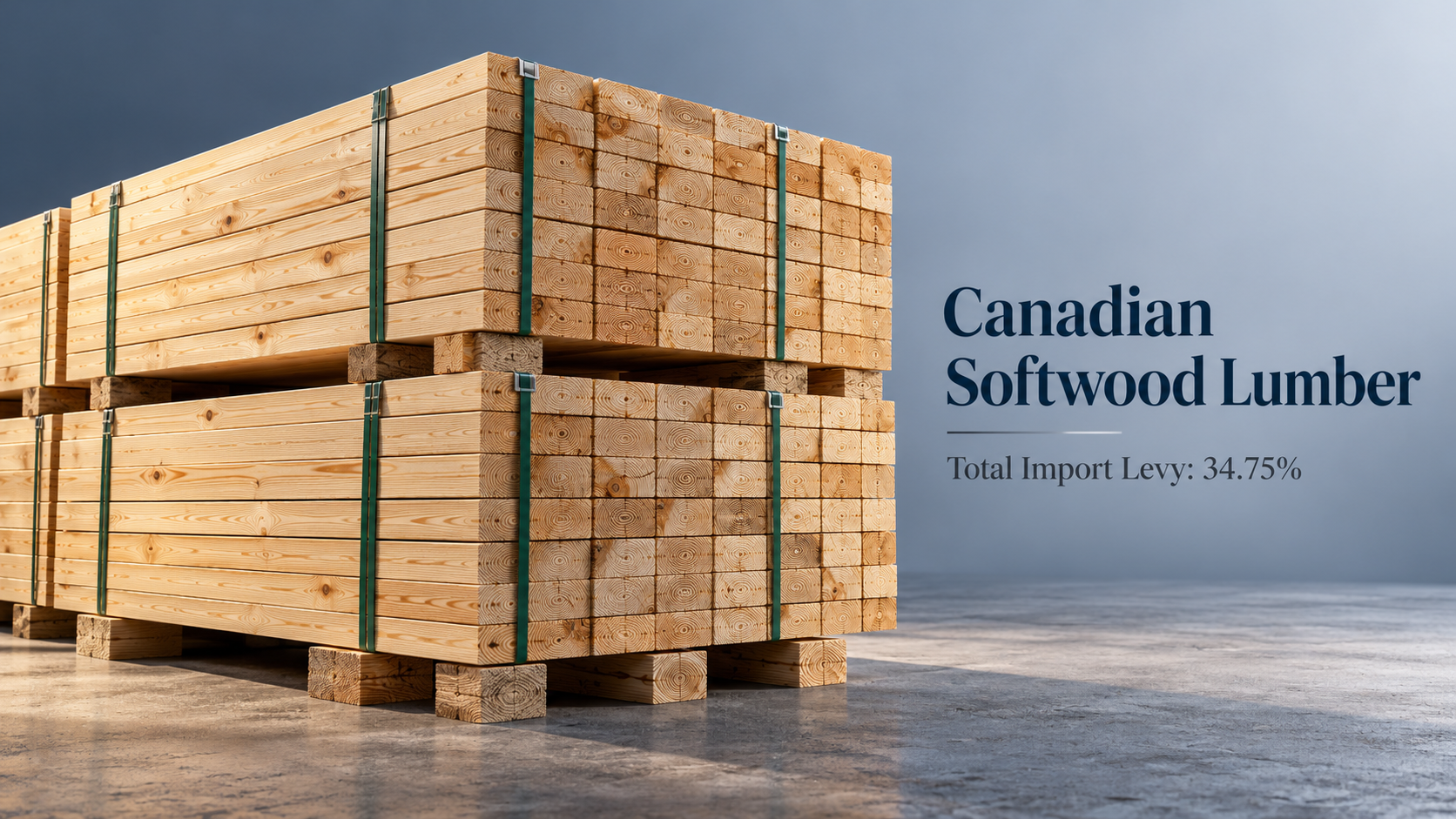
The U.S. Department of Commerce has lowered combined antidumping and countervailing duties on Canadian softwood lumber from 35.16% to 24.75% in the final results of its seventh administrative review. The event date is not specified in the supplied information. With a separate 10% Section 232 tariff remaining in place, the stated total import levy is 34.75%. For Canadian producers, exporters and their buyers, the decision may warrant a review of trade costs and purchasing assumptions, although shipment-level implementation details remain unspecified.
The Review Reduces Two Duties While the Section 232 Tariff Remains
The final results set the antidumping duty rate at 10.64% and the countervailing duty rate at 14.11%, bringing their combined rate to 24.75%, down from 35.16%.
The previously imposed 10% Section 232 tariff remains in place. Including that tariff, the total import levy stated in the supplied summary is 34.75%. The decision affects more than 200 Canadian lumber producers and exporters.
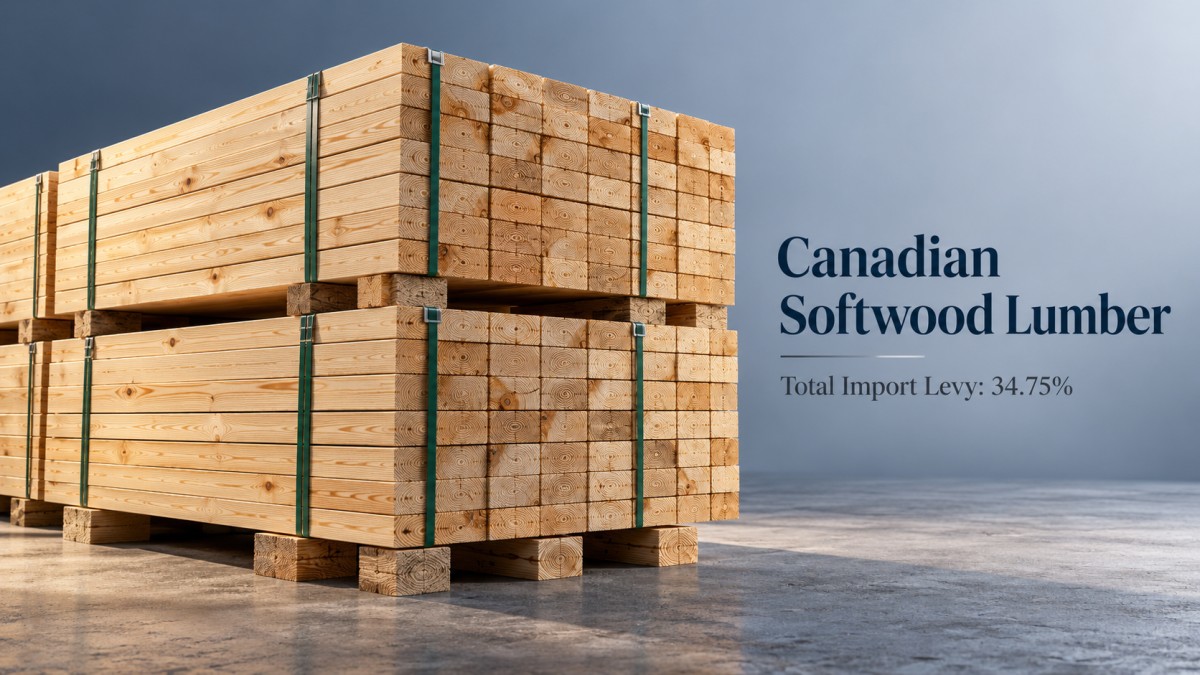
Pricing Exposure Extends Across Export Sales and Procurement
Export quotations may need revised duty assumptions
From an industry perspective, Canadian producers and exporters may need to reassess quotations that incorporate the previous combined duty rate. The practical effect could depend on how a transaction allocates tariff costs between seller and buyer. Analysis suggests that reviewing pricing assumptions and contractual responsibilities would be more useful than assuming the duty reduction automatically produces an equivalent improvement in exporter margins.
Buyers may reassess landed costs and purchasing commitments
For importers and purchasing teams, the lower combined rate could change comparisons between existing quotations and prospective orders. However, analysis should account for the retained Section 232 tariff: using 24.75% as the complete tariff burden would understate the 34.75% total reported in the supplied information. Any expected purchasing benefit would also need to be assessed against the commercial terms of the transaction.
Distributors and processors may face different cost assumptions across orders
Analysis suggests that businesses purchasing lumber for resale or processing could encounter different pricing assumptions across existing inventory, open orders and new offers. They may therefore find it useful to distinguish the duty assumptions used for each purchase before revising downstream quotations. The supplied information does not establish that inventory values, selling prices or delivery schedules have already changed.
Rate Verification Should Precede Commercial Adjustments
Keep the combined duties and total levy distinct
As a practical review step, businesses could show the 10.64% antidumping duty, 14.11% countervailing duty and retained 10% Section 232 tariff separately in their cost calculations. This would help purchasing and sales teams understand why the announced 24.75% combined rate differs from the stated 34.75% total levy.
Confirm applicability and timing for individual shipments
The supplied information does not identify an effective date or provide shipment-level instructions. Businesses should therefore consider checking the relevant official documentation before applying the revised rates to a particular shipment. The reported effect on more than 200 producers and exporters does not, by itself, establish identical treatment for every supplier or transaction.
Review open orders and tariff-related contract terms
As a commercial precaution, exporters and buyers could examine whether open quotations and purchase orders identify who bears tariff costs and how a rate change is reflected in pricing. Any adjustment should follow verified applicability and the agreed contract terms. The announcement alone does not establish a requirement to renegotiate prices or a right to recover previously paid amounts.
Validate purchasing assumptions before changing delivery plans
From a procurement perspective, businesses may wish to compare revised supplier offers with their existing budgets before changing order volumes or delivery commitments. A lower duty component could support a revised cost assessment, but the supplied information provides no evidence of changes in availability, lead times or supplier capacity.
A Final Review Outcome Still Leaves Execution Questions
Editorial analysis suggests that this development is best understood as a reported final administrative review outcome whose application to individual transactions still requires verification. The confirmed change concerns the combined antidumping and countervailing duty rate; the separate Section 232 tariff remains part of the stated total burden.
What deserves closer attention is how the revised rates translate into actual import costs and commercial offers. Effective timing, transaction applicability and subsequent trade execution information could influence business decisions. The supplied facts do not support conclusions that demand, shipment volumes or market prices have already responded.
Cost Planning Should Reflect Both the Reduction and the Retained Tariff
For the affected lumber trade, the decision provides a basis for reassessing duty-related cost assumptions while retaining the separate 10% Section 232 tariff in those calculations. A measured response would be to verify the rates applicable to each transaction, review commercial terms and assess any resulting change in procurement costs. At this stage, the announcement supports a targeted review of trade and purchasing arrangements; broader market effects remain a matter for observation.
Basis of Reporting and Items Requiring Further Verification
This article is based solely on the user-provided news title, event timing information and event summary. The event date was not specified, and no specific official source links were supplied. The reported decision and its implementation details therefore require continued verification against relevant official materials.
Potential verification sources include Department of Commerce announcements, customs or trade authority information, industry association updates and authoritative media reporting. These are suggested source categories, not sources independently consulted for this article. Further monitoring should focus on effective timing, applicable rates, trade execution, company implementation and industry feedback.
Leave A Message
If you are interested in our products and want to know more details, please leave a message here, we will reply you as soon as we can.