


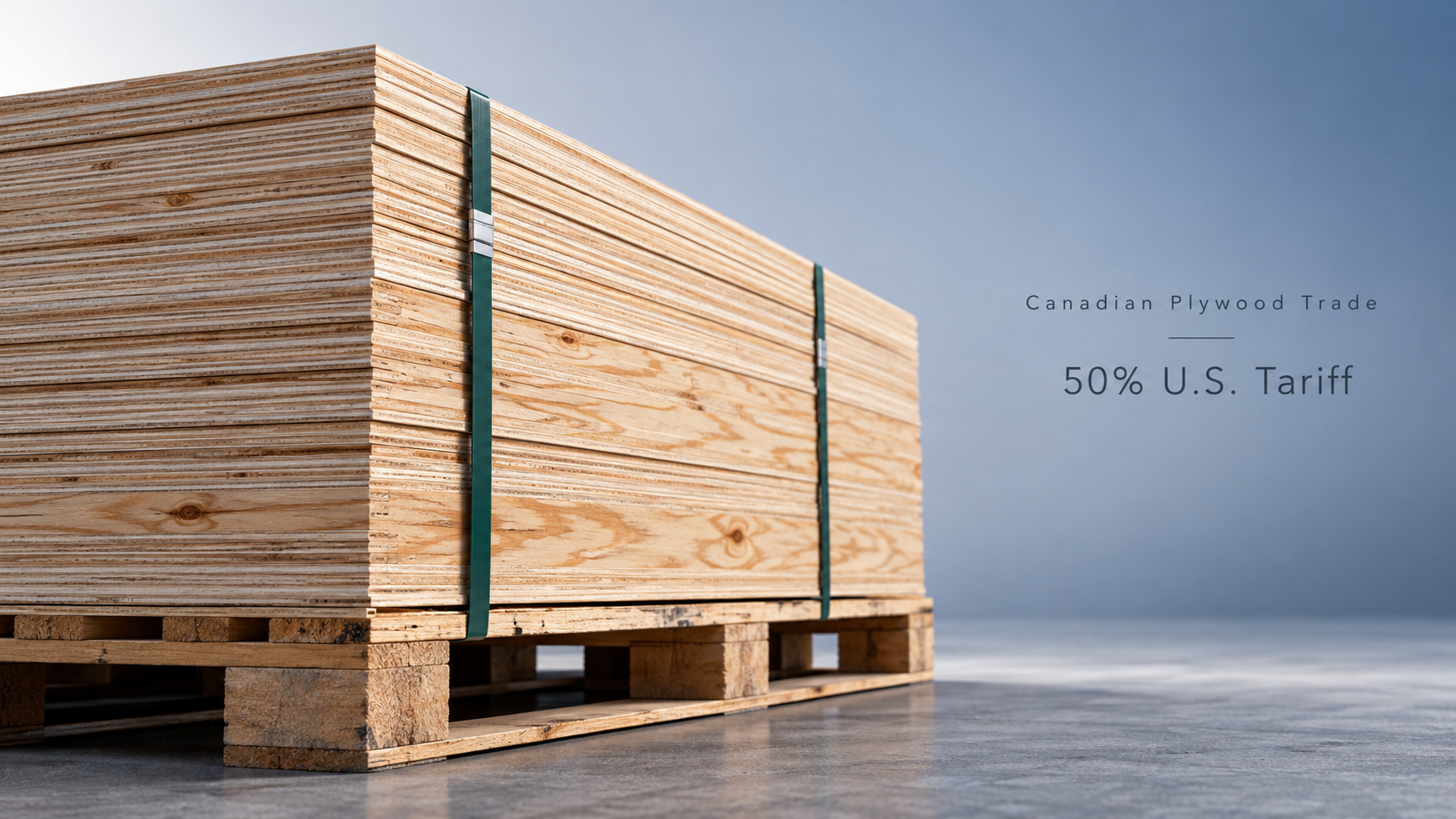
The United States imposed 50% tariffs on hundreds of Canadian products on October 27, 2026, following the collapse of trade negotiations between the two countries. The affected goods include plywood, cement, wine and hockey sticks.
For the North American plywood trade, the immediate consequence is a higher cost of moving covered Canadian products into the U.S. market. The effect on purchasing prices and supply arrangements will depend on how that additional cost is absorbed across suppliers, importers and buyers.
Import costs put plywood purchasing terms under pressure
A 50% tariff does not necessarily translate into a matching increase in the price paid by the final buyer. The duty adds to import costs, while the eventual selling price also depends on supplier pricing, contractual terms and the margins businesses are prepared to accept.
U.S. importers purchasing covered Canadian plywood could therefore face pressure on margins if they cannot pass the additional cost to customers. Canadian suppliers may face requests to revise quotations or share the cost through price negotiations. These are potential commercial responses; the tariff announcement alone does not establish how individual businesses will respond.
The first adjustments may appear in new quotations and order negotiations. Existing orders could also raise questions about responsibility for additional costs, depending on the terms agreed between the parties.
Supply shifts will depend on purchasing decisions
Higher import costs could prompt U.S. buyers to reassess Canadian plywood against other available supplies. Whether that leads to changes in sourcing will depend on comparable prices, product suitability, availability and delivery requirements.
The tariff establishes a new cost pressure on cross-border plywood trade. It does not, by itself, demonstrate a decline in shipments, a shortage or a lasting shift in market share. Subsequent pricing, order activity and shipment patterns will be more useful indicators of how far the disruption extends through the supply chain.
Leave A Message
If you are interested in our products and want to know more details, please leave a message here, we will reply you as soon as we can.