


Film Faced Plywood vs Uncoated Plywood: What Is the Difference?
Quick answer: Film faced plywood has a protective film surface and is commonly selected for concrete formwork and shuttering. Uncoated plywood has an exposed veneer surface and may be used for furniture, packaging, decoration, general construction and other applications according to its veneer grade, core, bonding and thickness. The better choice depends on what the panel will contact, how it will be processed and what surface finish the project requires.
The presence of a film changes the panel surface, but it does not by itself determine the core species, glue type, plywood grade or expected service life. Buyers should compare the complete specification rather than choosing only by surface color or sheet price.
What Is Film Faced Plywood?
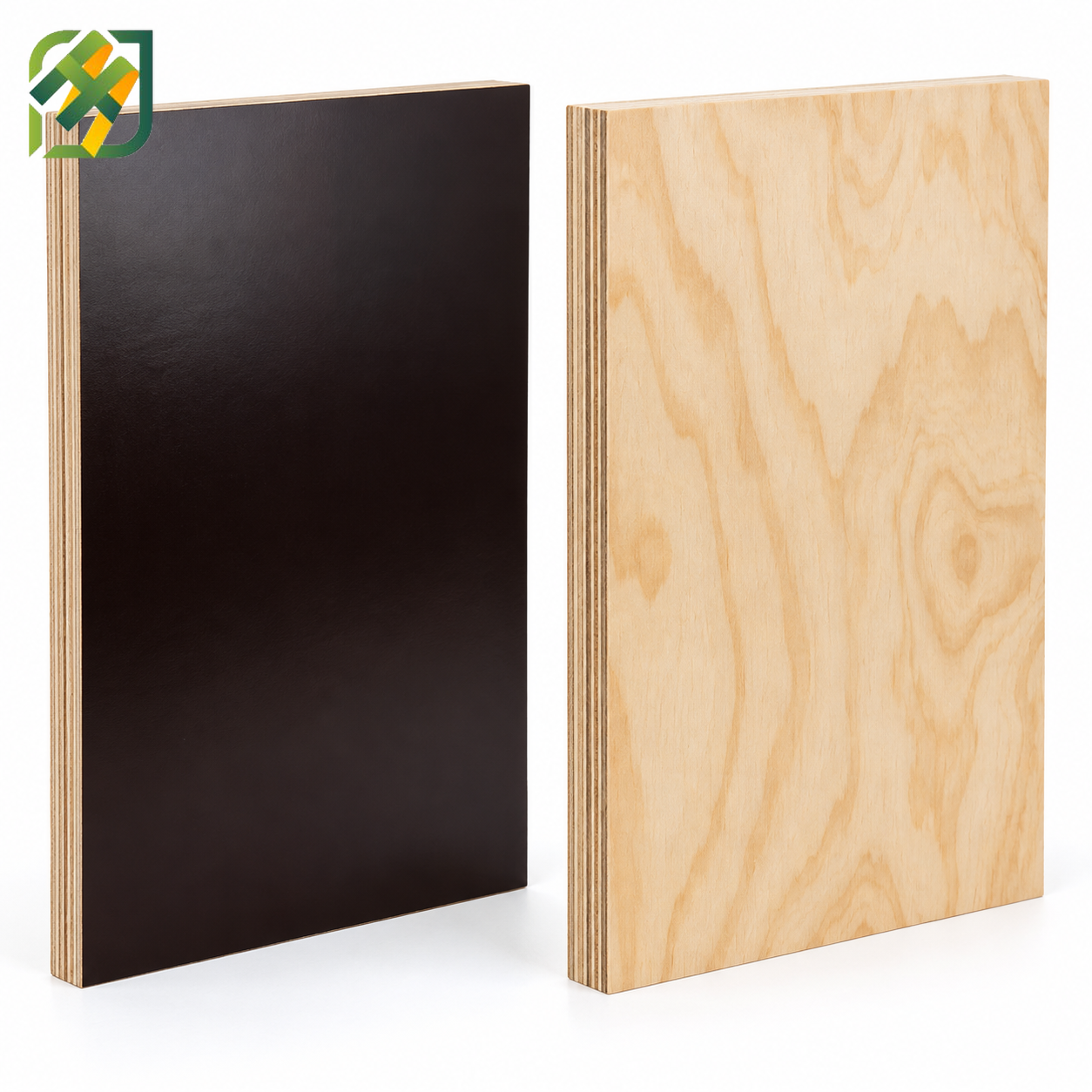
Film faced plywood is a plywood panel covered with a film surface on one or both faces. Black film and brown film are common options for concrete formwork products, while other film systems may be supplied for specific applications. The film provides a more uniform contact surface than exposed wood veneer and helps protect the panel face during suitable use.
For concrete formwork, the surface can help reduce direct contact between wet concrete and the plywood veneer, support easier cleaning and contribute to a more consistent concrete contact face. However, performance also depends on the core structure, bonding quality, thickness accuracy, flatness, edge treatment, formwork design and site handling.
Explore Haoxin film faced plywood products for concrete formwork and shuttering applications.
What Is Uncoated Plywood?
Uncoated plywood does not have a film covering the veneer surface. It may have a raw, sanded or selected veneer face, depending on the product. The term “uncoated plywood” is not one fixed grade. It can include commercial plywood, furniture plywood, packing plywood, birch plywood, poplar plywood and selected construction plywood.
Its suitability depends on the face and back veneer, core construction, bonding requirement, surface grade, thickness, moisture condition and intended processing. Some products are selected for visible furniture surfaces, while others are used as internal components, packaging panels or substrates for painting, veneering and laminating.
View Haoxin commercial plywood products for furniture, cabinetry and general interior applications.
What Are the Main Differences?
1. Surface
Film faced plywood: Has a film surface that creates a more uniform contact face.
Uncoated plywood: Shows the veneer surface and may be raw, sanded or graded for a selected finish.
2. Main Application
Film faced plywood: Commonly selected for concrete formwork, shuttering and related construction uses.
Uncoated plywood: Commonly selected for furniture, cabinets, packaging, decoration, woodworking and general panel applications.
3. Concrete Contact
Film faced plywood: The film provides a more suitable concrete contact surface when the full panel specification matches the formwork design.
Uncoated plywood: The exposed veneer can absorb moisture and transfer more wood texture to the concrete surface, so it is not normally the first choice when a consistent formed finish is required.
4. Cleaning and Handling
Film faced plywood: A sound film surface is generally easier to clean after suitable formwork use. The panels still require careful stripping, prompt cleaning and flat storage.
Uncoated plywood: Cement, dirt, oil and water can contact the veneer directly, and cleaning methods must suit the surface grade and final application.
5. Further Processing
Film faced plywood: Cutting and drilling break the film layer, so newly exposed edges and holes may require suitable protection for the intended use.
Uncoated plywood: Often offers more flexibility for sanding, painting, veneering, laminating, edge banding and furniture processing, depending on the selected veneer and core.
6. Purchasing Cost
Film faced plywood includes an additional surface system and production process, but price cannot be compared by film alone. Core species, veneer quality, glue, thickness tolerance, panel size, pressing process, surface quality and packing all affect the quotation. Uncoated plywood is not automatically cheaper or lower quality; premium veneer-faced plywood may cost more than an economy formwork panel.
Does Film Faced Plywood Mean Completely Waterproof?
A film surface helps protect the panel face, but film faced plywood should not automatically be described as completely waterproof. Cut edges, drilled holes, damaged areas and exposed core veneers can still allow moisture to enter. Bonding quality, core construction, edge treatment and site care remain important.
The correct approach is to confirm the ordered product specification and protect any newly cut or drilled areas as required by the application. Panels should be stored flat, protected from unnecessary exposure and handled without damaging the film.
Does Film Color Determine Glue or Quality?
Black film and brown film are surface choices. Film color alone does not prove the glue type, core material, plywood grade or number of possible reuses. The face film and the adhesive bonding the veneer layers are separate specifications.
Buyers should confirm the core, glue or bond requirement, film surface, thickness, size, edge treatment and approved sample separately. Reuse performance cannot be guaranteed by film color because it is also affected by formwork pressure, support spacing, concrete mix, release method, cleaning, drilling, weather and storage.
Which Plywood Should Buyers Choose?
- Concrete formwork and shuttering: Select film faced plywood that matches the formwork system, support spacing and concrete-finish requirement.
- Furniture and cabinets: Select furniture plywood, commercial plywood or decorative plywood with the required face grade and emission specification.
- Painting, veneering or laminating: Select a suitable uncoated and sanded plywood substrate.
- Export packaging and crates: Select packing plywood or OSB according to package dimensions, product weight and handling method.
- Visible natural veneer appearance: Select an appropriate uncoated veneer-faced plywood and approve the face sample before production.
What Should Buyers Confirm Before Ordering?
- Final application and use environment
- Sheet size and required thickness
- Core material and core construction
- Glue or bonding requirement
- Film surface, veneer species or face grade
- Thickness tolerance, flatness and edge treatment
- Cutting, drilling or further processing
- Quantity, pallet packing and destination port
Frequently Asked Questions
Can film faced plywood be cut to project sizes?
Selected cutting requirements can be discussed according to the dimensions and order quantity. Newly exposed edges and drilled areas should receive suitable protection for the intended application.
Which plywood is suitable for concrete formwork?
Film faced plywood is commonly selected, but the core, bonding, film surface, thickness, panel size and formwork support system should be confirmed together.
What information is needed for an accurate quotation?
Provide the plywood type, size, thickness, core, bonding requirement, surface, application, quantity, packing requirement and destination port.
Send Your Plywood Inquiry
Tell us your required plywood type, size, thickness, core, glue, surface, quantity, application and destination port. Haoxin will provide a suitable quotation according to your project needs.
Contact Haoxin for plywood specifications, samples and pricing.