


How Is Plywood Packed and Loaded for Export? A Buyer’s Guide
Quick answer: Export plywood is normally stacked on pallets, protected with suitable covering, secured with straps and loaded according to panel size, thickness, density, pallet weight and container payload. Buyers should confirm the packing method and estimated loading quantity before placing an order because different plywood specifications can produce very different shipment weights.
How Is Plywood Packed on Export Pallets?
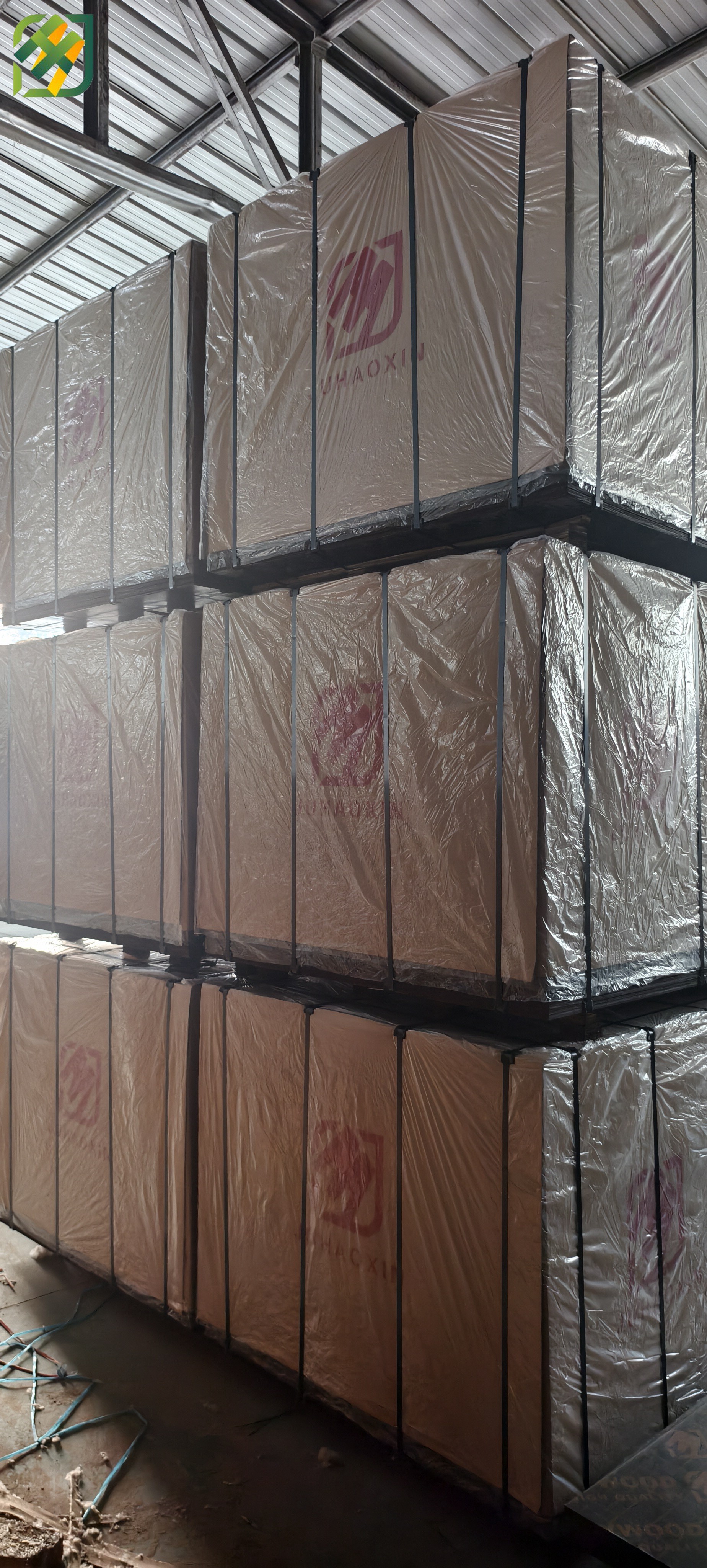
Plywood sheets are usually aligned and stacked on export pallets. The package should remain stable during forklift handling, container loading, sea transportation and unloading at the destination. Pallet dimensions and the number of sheets per package depend on the plywood size, thickness, weight and customer requirements.
- Bottom support: Suitable pallet bearers help keep the plywood package stable and accessible for forklift handling.
- Top and bottom protection: Protective boards or covering materials help reduce surface and corner damage.
- Package alignment: Sheets should be stacked evenly to reduce edge damage and movement during shipment.
- Package quantity: Sheets per pallet should be calculated from panel thickness, package height, handling requirements and total weight.
Buyers sourcing plywood for construction, furniture or industrial packaging can review Haoxin’s plywood product range before confirming the required packing method.
How Are Plywood Panels Protected from Moisture?
Plastic wrapping or another suitable covering can help protect plywood from dust and incidental moisture during storage and transportation. Corner and edge protection can also reduce impact damage when pallets are moved. However, export wrapping does not make the plywood completely waterproof, and packages should not be stored in standing water or exposed to prolonged rain.
The container should be checked for visible water, holes, strong odours and serious interior damage before loading. Plywood packages should also be dry and properly protected before the container doors are closed.
Why Are Straps, Corners and Labels Important?
Steel straps or other suitable packing straps help keep plywood packages together during handling and transportation. Corner protection helps distribute pressure from the straps and reduces damage to panel edges.
Clear package labels make receiving and warehouse checking easier. A label may include the product name, size, thickness, quantity, package number, order number and shipping marks agreed with the buyer. Customized labels should be confirmed before production.
Should Buyers Choose a 20GP, 40GP or 40HQ Container?
The correct container cannot be selected by volume alone. Plywood is a relatively heavy cargo, so the final loading plan must consider both available space and the permitted cargo weight.
- 20GP: Often considered for dense or heavy plywood because the cargo may reach the practical weight limit before filling a larger container.
- 40GP: Can be considered when package dimensions, cargo weight and order quantity suit the loading plan.
- 40HQ: Provides more internal volume, but heavy plywood may still be restricted by payload and destination transport limits.
For a specific example, see how many sheets of 18mm film faced plywood may fit in a 40HQ container. Final quantities must still be recalculated for the actual core, density, packing and destination.
How Can Transport Damage Be Reduced?
- Confirm the panel size, thickness, pallet dimensions and package weight before loading.
- Use suitable surface, edge and corner protection.
- Keep package weight within the limits of the handling equipment.
- Arrange pallets to reduce movement and uneven pressure inside the container.
- Check that the container floor is dry and suitable for loading.
- Confirm destination-port and inland-transport weight requirements before shipment.
What Packing and Loading Photos Should Buyers Request?
Packing and loading photos help buyers check whether the shipment matches the confirmed order. Useful photos may include:
- Plywood surfaces and edges before wrapping
- Finished pallets with straps and corner protection
- Package labels and shipping marks
- The empty container floor and interior before loading
- Pallet arrangement during container loading
- The completed load before the container doors are closed
What Information Is Needed for a Loading Calculation?
An accurate loading estimate requires more than the total order quantity. Buyers should provide the following information:
- Product: Film faced plywood, commercial plywood, furniture plywood, packing plywood or another panel type
- Specification: Length, width, thickness, core and approximate density
- Order quantity: Sheets, cubic metres, pallets or containers
- Packing: Sheets per pallet, pallet dimensions, wrapping, labels and shipping marks
- Shipment: Container type, destination port and any known cargo-weight restriction
For packaging applications, buyers can also review packing plywood for export packaging and pallets.
Send Your Plywood Inquiry
Tell us your required plywood type, size, thickness, core, quantity, packing method and destination port. Haoxin will provide a suitable quotation and estimated loading suggestion according to the confirmed product specification and shipment requirements.
Leave A Message
If you are interested in our products and want to know more details, please leave a message here, we will reply you as soon as we can.